At Sinai Health, a bold shift is underway—one that reimagines how research and care come together to accelerate impact in health and society.
With the launch of its first-ever Research Strategic Plan (2026–2031), Sinai Health is uniting its full research enterprise under a single, integrated vision: Sinai Health Research. For the first time, our discovery science powerhouse, the Lunenfeld-Tanenbaum Research Institute (LTRI), will be intentionally connected to all other research centres and programs across Sinai Health.
“This marks the beginning of a future where research and care are intentionally connected to drive innovation in medicine faster than ever before.”
Building the highways of collaboration that turn insight into impact
At the centre of Sinai Health Research is a powerful idea: discovery accelerates when people, data and technologies work together by design.
Imagine collaboration not as a series of handoffs but as a continuous exchange linking discovery science, clinical inquiry and population health research. In this model, insights from the lab inform care at the bedside, while real-world patient experiences shape the next generation of research questions.
This plan builds on a legacy of visionary supporters who understood that research is essential to better care. Since the inception of the LTRI, supporters such as The Samuel Lunenfeld Charitable Foundation and Larry and Judy Tanenbaum have recognized the importance of investing in research to transform the future of health care. Their commitment helped establish and strengthen the LTRI as a global leader in discovery science, making it possible for Sinai Health to launch an integrated research strategy that few academic health sciences centres are positioned to achieve.
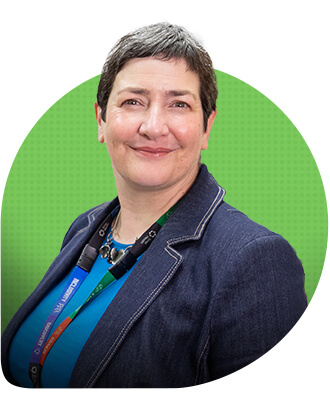
Dr. Anne-Claude Gingras, Vice President of Research at Sinai Health, Director of the LTRI and holder of the Dr. Louis Siminovitch Chair in Research, describes the strategy as building “highways of collaboration” across all of Sinai Health’s research programs—a strategy enabled through shared platforms, integrated data systems and, critically, through people.
“We’ve always had extraordinary strengths across discovery and clinical research,” says Dr. Gingras. “Now, we’re building the pathways that allow those strengths to work together in entirely new ways, accelerating development of potential new treatments.”
Investing in infrastructure to unlock the power of every patient experience
In practice, this means fewer silos and more shared momentum. It also means recognizing something fundamental: that every patient interaction holds the potential to advance knowledge.
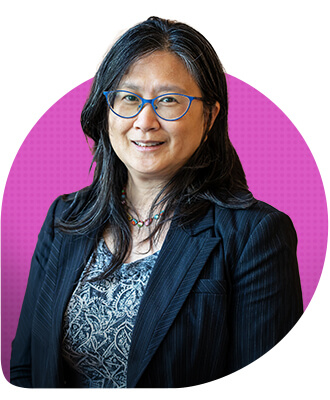
“Data is the patient’s story—what they share with their oncologist, what they’ve gone through and what they’re experiencing,” says Dr. Susanna Mak, Deputy Director of Clinical Research at Sinai Health and Senior Clinician-Scientist at the LTRI. “The LTRI scientist discovers new data from a tumour sample removed by the surgeon that the patient has donated for scientific analysis. And the epidemiologist connects the patient’s unique data points with thousands of others to reveal patterns recognized for the first time.”
“Data are not just inputs. They are gifts. And if we care for them properly, they can help unlock discoveries that benefit countless others.”
To pull this “precious data” through the research continuum, Sinai Health is investing not only in how data are collected, but also in how they are stored, connected and shared. Through world-leading infrastructure at the LTRI and across the system—including biobanks, data repositories, advanced technology platforms and integrated clinical systems—researchers will be able to preserve and access patient data in ways not previously possible.
This work is grounded in a clear principle: that data must be both protected and put to use. By increasing the accessibility of these clinical and scientific assets, Sinai Health is enabling researchers across disciplines to learn from each patient experience—safely, responsibly and at scale.
To support this, Sinai Health is also investing in advanced platforms—from genomics and proteomics to imaging, lab automation and computational biology—enabling deeper insights into disease and opening new pathways to understanding and treatment.
The result is a research ecosystem where today’s data can answer tomorrow’s questions.
Recruiting the minds that will accelerate the future of research
Advances in technologies, such as artificial intelligence, CRISPR gene editing and next-generation sequencing, are accelerating the pace of discovery—and drawing a new generation of researchers to Sinai Health with the expertise to harness them.
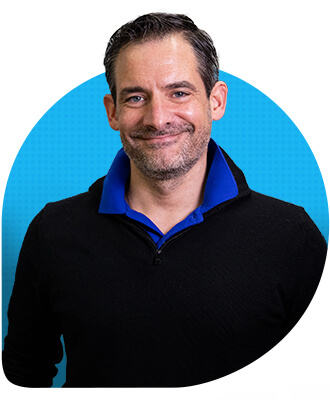
“Recruitment is one of the most important levers we have,” says Dr. Daniel Schramek, Deputy Director of Discovery Research at Sinai Health, Senior Investigator at the LTRI and holder of the Dr. Tony Pawson Sinai Chair in Cancer Research. “We are at a moment of generational change in science.”
Sinai Health has begun to secure funding for 10 new principal investigator positions to attract researchers from across Canada, the United States and internationally. “These are not isolated recruits,” says Dr. Gingras. “They are linchpins—scientists whose expertise straddles discovery, clinical and population health research, bringing new technologies and accelerating the pace of discovery across the system.”
“The questions we are asking—what drives cancer, neurodegeneration, pre-eclampsia—are not new. What has changed is our ability to answer them.”
One prospective recruit, for example, spans epidemiology, clinical trials and translational science—bridging population health, patient care and discovery research in a single program. It is exactly the kind of cross-cutting expertise Sinai Health is prioritizing.
The goal is not simply to grow, but to build a research ecosystem where ideas move more fluidly—where insights from one domain can rapidly inform another, and where collaboration becomes the default.
“Technology is the most critical enabler,” says Dr. Schramek. “We are now able to interrogate disease in ways that were not possible even a decade ago. That changes not only how we do research, but how quickly we can translate discoveries into impact.”
Together, these investments—in people, platforms and partnerships—are expanding Sinai Health’s scientific footprint and positioning it to move bold ideas more rapidly from insight to application.
Philanthropy: the catalyst for what comes next
This level of ambition is only possible because of philanthropy. For 40 years, donor support has fuelled the success of the LTRI, enabling bold ideas, funding essential research infrastructure and supporting the people and teams behind the science.
Now, that same philanthropic spirit will power Sinai Health Research, supporting not only individual projects, but also the systems and connections that make sustained innovation possible.
With defined focus areas in women’s and infants’ health, oncology and inflammatory conditions, the strategy builds on areas of established leadership while opening new opportunities for cross-disciplinary collaboration.
The goal is clear: to tackle the most complex health challenges of our time with the full strength of an integrated research system.
For donors, that means something powerful: the opportunity to advance not just individual breakthroughs, but an entire system built to deliver them to patients. It is a model made possible by generations of philanthropic leadership, and one that will continue to depend on it.
Because when discovery and care move forward together, the future of health care doesn’t just evolve – it accelerates.